Last updated 2026-07-25
TL;DR
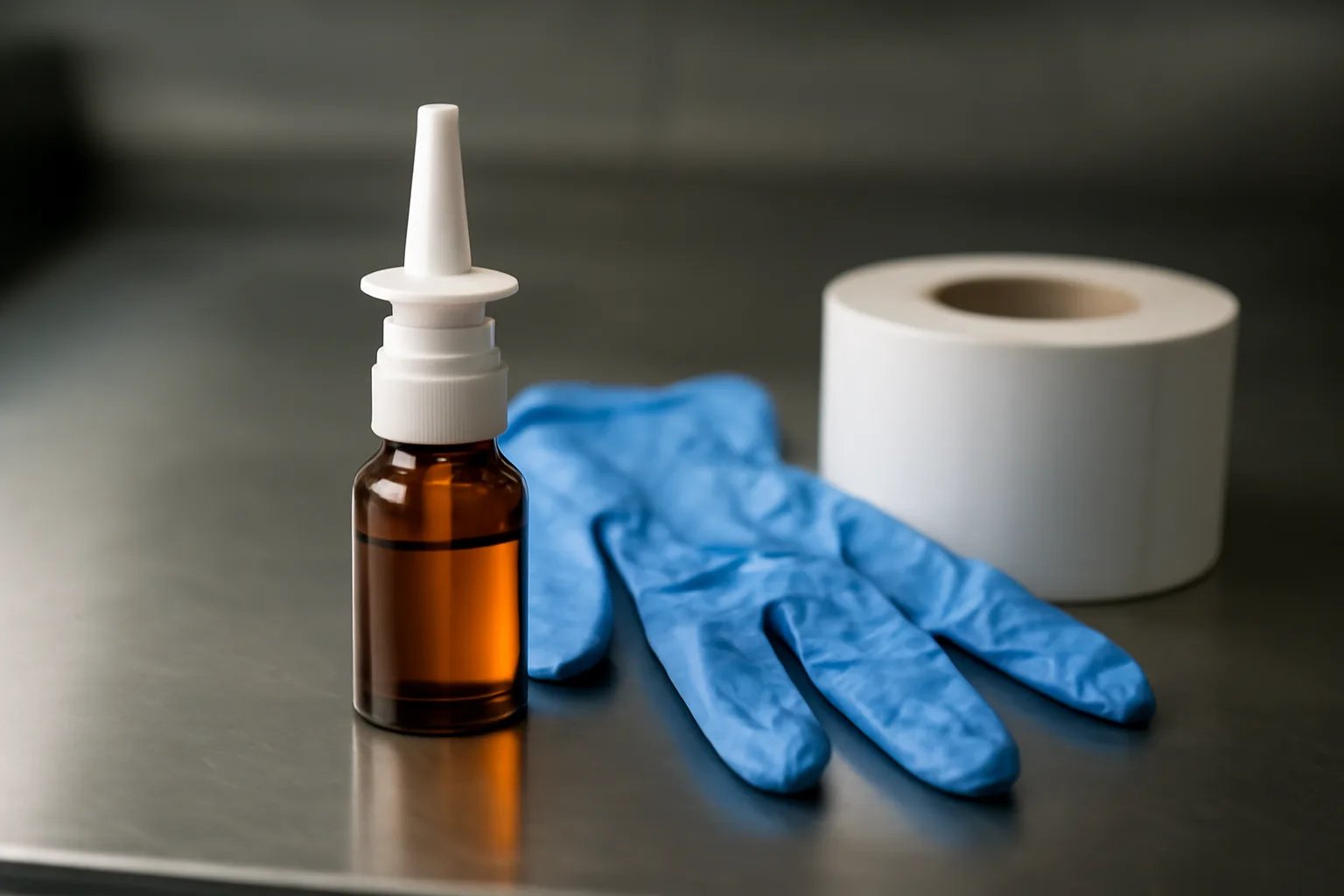
Semax isn't FDA-approved, so there's no pharmacy price to quote. In practice, a bottle of compounded or research-labeled Semax nasal spray costs roughly $60 to $150 depending on concentration, volume, and whether a provider is involved. The real cost question isn't the sticker price, it's whether you're buying from a source that can prove what's actually in the bottle.
How much does Semax actually cost?
There's no list price for Semax because there's no FDA-approved version of it sold in US pharmacies. Everything you see priced online is either a research chemical listing, a compounded nasal spray from a compounding pharmacy working with a prescriber, or (occasionally) a gray-market import of the Russian pharmaceutical product. In practice, a single bottle of Semax nasal spray in the US market runs somewhere between $60 and $150. Where you land in that range depends mostly on three things: concentration (0.1% vs 1% solutions are very different products), bottle volume (3 mL vials vs larger multi-dose bottles), and whether a licensed provider and pharmacy are involved in the chain or you're buying straight from a research-chemical vendor with no oversight. That's a wide range for what looks like the same product on a label. The reason it's wide is that you're not paying for one standardized thing. You're paying for some combination of raw peptide, compounding labor, packaging, and (if you're smart about it) a provider relationship that reviews your history first. Two bottles that say "Semax 0.1% nasal spray" on the label can come from completely different supply chains with completely different quality controls behind them, and the price alone won't tell you which is which.
Why isn't there a standard price for Semax like there is for other drugs?
Because Semax has never gone through FDA approval, so it doesn't exist in the normal US drug pricing infrastructure at all. You won't find it in Drugs@FDA, the agency's database of approved drug products, because it was never submitted for that process in the United States [1]. That matters more than it sounds. Approved drugs have a manufacturer, a set potency, an insurance code, and a competitive generic market that pushes price toward a predictable range. Semax has none of that in the US. What exists instead is the 503A/503B compounding pathway, where pharmacies can prepare a drug from a bulk substance for an individual patient under a prescription, governed by 21 U.S.C. 353a [2] and the FDA's bulk drug substance rules for compounding under section 503A [3]. Whether a given peptide (Semax included) is even legal to compound depends on whether it's on FDA's bulks list under 21 CFR 216.23 for 503A pharmacies or 21 CFR 216.24 for 503B outsourcing facilities [4][5], or whether it appears on the agency's list of substances nominated for compounding use that FDA is still evaluating [6]. This is a regulatory gray zone, not a settled market, and that's exactly why pricing looks like a patchwork instead of a shelf price.
What's the difference between compounded, research-grade, and imported Semax pricing?
These three categories look similar on a product page and are not similar at all once you know what you're buying. Compounded Semax through a pharmacy, tied to a provider consult, sits at the higher end of the range, often $80 to $150 depending on concentration and whether the provider visit is bundled into the price. You're paying for a prescriber who reviewed your intake, a pharmacy operating under 503A rules, and (ideally) a certificate of analysis on the batch. Research-chemical listings are usually the cheapest option per bottle, sometimes under $60, sometimes priced by the milligram of raw peptide rather than as a finished nasal spray. These are explicitly "not for human consumption" on the label. There's no clinical oversight, and purity testing (if it exists at all) is whatever the vendor claims, not an independent audit. Imported product claiming to be the Russian pharmaceutical formulation is the hardest to price-check because it depends entirely on the importer and whatever markup they apply, and you have no realistic way to verify the bottle matches what's manufactured in Russia. None of these three paths gets you an FDA-reviewed product. The compounded route at least puts a licensed pharmacy and a prescriber's judgment between you and the vial.
Is a cheap Semax listing ever a good deal?
Usually not, and here's the actual reasoning, more than a warning. A nasal spray formulation isn't just peptide dissolved in water. Stability, sterility, correct pH, and accurate concentration all take real pharmaceutical work to get right, and that work costs money. When a listing undercuts the market by half, the corners being cut are almost never visible on the label. It's the things you can't see: whether the peptide degraded before it was compounded, whether the actual concentration matches what's printed, whether the manufacturing environment was even sterile. The honest answer is that price alone doesn't tell you quality, but a price far below the going range is a signal to ask harder questions, not a reason to celebrate. Ask for a certificate of analysis. Ask whether a pharmacist or provider was involved at any point. If the answer to both is no, the discount isn't a deal, it's a smaller bet on an unverified product.
What am I actually paying for when I buy Semax?
Four things, roughly, and they don't cost the same amount to provide. First is the raw peptide itself, which is a small fraction of the final price for a legitimate compounded product. Second is compounding labor and quality control, meaning a pharmacist actually formulating a stable, correctly-dosed nasal spray rather than someone diluting powder in a garage. Third is the provider layer, if one exists, which is a clinician reviewing your history before you get a prescription. Fourth is shipping, packaging, and the vendor's margin, same as with any consumer product. Worth being blunt here: nobody selling Semax in the US is selling you an FDA-reviewed drug, full stop, regardless of price. What you're actually buying is a level of trust in the supply chain. A $130 bottle from a provider-reviewed pharmacy relationship and a $130 bottle from an anonymous online store are not the same purchase even at an identical price point, because one of them has a licensed professional's judgment attached to it and one doesn't.
Does Russian regulatory approval affect the price or the trust level?
Semax has been used clinically in Russia for decades, most notably studied for ischemic stroke, where a Russian-language clinical study looked at its efficacy across different stages of stroke recovery [7]. That's real clinical history, and it's worth taking seriously rather than dismissing. But Russian regulatory approval is not the same thing as FDA approval, and it doesn't transfer any US legal status or safety oversight to a bottle sold here. It also doesn't set the US price. A pharmacy in Moscow selling an approved Russian pharmaceutical product operates under an entirely different regulatory and manufacturing framework than a US compounding pharmacy or research-chemical importer. If a US listing implies Russian approval means it's "basically FDA-equivalent," that's marketing, not regulatory fact. The honest framing: decades of Russian clinical use is a meaningfully large body of real-world and trial experience, but it hasn't been replicated in Western randomized trials, and it doesn't establish a US price or a US safety pathway.
What does the underlying research say, and does it justify the price?
This is where Semax gets genuinely interesting, and also where you have to be careful about what the evidence actually shows versus what it's being sold on. The bulk of Semax research is mechanistic and animal-based, published mostly in Russian journals or by Russian research groups, and it has not been replicated in large Western clinical trials. That doesn't mean it's junk science, it means you should weight it as strong preclinical and mechanistic evidence rather than as proof of clinical benefit in the way an FDA-reviewed drug's trial data would be. What's actually in that literature: Semax has been shown to bind specifically to and increase levels of brain-derived neurotrophic factor (BDNF) protein in the rat basal forebrain [8]. It activates dopaminergic and serotoninergic systems in rodents [9]. In cerebral ischemia-reperfusion models, it and its related peptide Pro-Gly-Pro activate transcription of neurotrophins and their receptor genes [10], and genome-wide transcriptional analysis in a rat focal ischemia model showed Semax changes expression of genes tied to immune and vascular systems [11]. A 2025 study in the British Journal of Pharmacology found Semax acts on the mu opioid receptor gene Oprm1 to promote functional recovery after spinal cord injury in female mice [12]. There's even a small human neuroimaging study looking at Semax's effect on the brain's default mode network [13]. That's a real, substantial body of mechanistic work. It is not the same thing as a US Phase 3 trial, and no price tag changes that fact. If you're paying a premium for Semax hoping it's clinically proven the way an FDA drug is, you're paying for something the evidence doesn't yet support at that level.
How does Semax pricing compare to other nootropic peptides?
Semax tends to sit in the middle of the nootropic peptide pricing pack, more expensive than basic racetams, comparable to or a bit above Selank (its close cousin, both being ACTH-derived regulatory peptides, and both studied together in at least one functional connectomics paper looking at brain network effects [14]).
| Product type | Typical price range | Oversight level |
|---|---|---|
| Compounded Semax nasal spray, provider-reviewed | $80 to $150 per bottle | Pharmacy + prescriber |
| Research-chemical Semax, no consult | Under $60 to $100 | None, vendor claims only |
| Imported Russian pharmaceutical product | Highly variable | Foreign regulatory framework, no US oversight |
| Selank nasal spray (comparable peptide) | Roughly similar range to Semax | Same compounding pathway |
The price gap between categories is really an oversight gap wearing a price tag. If a listing is dramatically cheaper than the ranges above, assume the missing cost is quality control, not vendor generosity.
What should I actually do with this information?
Don't shop on price alone. Shop on chain-of-custody first, price second. Ask who compounded it and under what pharmacy license. Ask whether a provider reviewed your intake before a prescription was written. Ask for a certificate of analysis showing actual concentration and purity, more than a marketing claim. If a seller can't answer these plainly, the price (however tempting) isn't worth the risk, because what you're really buying at that point is an unverified vial with a familiar name on it. If you want the provider-reviewed route rather than a blind research-chemical purchase, Semax Labs works with a fulfilling pharmacy partner so the product you receive has a prescriber and pharmacy behind it, more than a listing. That doesn't make Semax an FDA-approved drug. It does mean there's a licensed professional's judgment in the chain, which is the single biggest factor separating a reasonable purchase from a risky one at any price point. Before you buy anything, it's worth reading up on how to reconstitute semax and semax storage and shelf life, because a cheap bottle that degrades in three weeks from poor storage guidance is a worse deal than a pricier one that's stable for months.
What red flags mean I'm overpaying or being scammed?
A few patterns show up again and again in the gray market, and they're worth naming directly. No certificate of analysis, ever, even on request, is the single biggest red flag. A vendor pricing by vague "strength" claims instead of a stated concentration (like 0.1% or 1%) is another. Prices that swing wildly between listings from the same seller with no explanation (a $40 bottle one week, $120 the next, same product) suggest inventory churn rather than a stable supply chain. And any listing that implies Russian government approval means US safety oversight is stretching a fact to sell a product; it's worth reading is semax safe and semax drug interactions before trusting marketing language over your own judgment. None of these red flags are about price being too high. They're about price being disconnected from any verifiable quality signal, which is the actual thing you're trying to buy.
Frequently asked questions
How much does a bottle of Semax nasal spray cost?
Typically $60 to $150 in the US gray market, depending on concentration, bottle volume, and whether a licensed pharmacy and provider are involved. There's no standardized price because Semax isn't an FDA-approved drug sold through normal pharmacy channels.
Why is Semax not available at a normal pharmacy price?
Semax has never been through FDA approval and doesn't appear in Drugs@FDA, the agency's database of approved products. It's sold only through compounding pharmacies under 21 U.S.C. 353a, research-chemical vendors, or imports, none of which set a standardized price the way an approved generic drug market does.
Is cheaper Semax lower quality?
Often, yes, though not always. Nasal spray formulation requires real pharmaceutical work to get concentration, sterility, and stability right, and that costs money. A price far below the typical range is a signal to ask for a certificate of analysis and provider involvement, not a reason to assume you found a bargain.
Does Russian approval of Semax mean it's safe to buy cheaply online?
No. Russian regulatory approval reflects decades of clinical use there, including stroke recovery studies, but it doesn't establish US safety oversight, doesn't set a US price, and doesn't mean a bottle sold online in the US matches the manufacturing standards of the approved Russian product.
What's the difference between compounded and research-grade Semax pricing?
Compounded Semax, tied to a prescriber and pharmacy operating under 503A rules, usually costs $80 to $150 and includes clinical oversight. Research-grade listings are often cheaper, sometimes under $60, but come with no prescriber review and no independent purity verification beyond the vendor's own claims.
Is Semax FDA-approved, and does that affect price?
No, Semax is not FDA-approved and does not appear in Drugs@FDA. Because there's no approved manufacturer or generic competition, there's no standardized US price; what you see is set independently by each compounding pharmacy or vendor.
Why do Semax prices vary so much between sellers?
Because the product isn't standardized. Concentration, bottle size, whether a pharmacy compounded it under FDA bulk substance rules, and whether a provider reviewed your case all vary seller to seller. Two bottles labeled identically can come from completely different supply chains with different quality controls.
Should I buy Semax from a research-chemical site to save money?
It saves money short-term but removes prescriber oversight and independent purity verification. These products are labeled "not for human consumption." If you're using Semax for personal use, a provider-reviewed compounding route costs more but puts a licensed pharmacist and clinician in the chain.
What does the price of Semax actually pay for?
Mostly compounding labor and quality control, plus, if included, a provider consult reviewing your history. The raw peptide itself is a small fraction of the cost. Shipping and vendor margin make up the rest, same as any specialty product.
Is there strong clinical trial evidence that justifies Semax's price?
The evidence is largely mechanistic and animal-based, published mostly in Russian-language journals, showing effects on BDNF levels, neurotransmitter systems, and gene expression after ischemic injury. It has not been replicated in large Western randomized trials, so treat it as promising preclinical science, not proof at the level of an FDA-reviewed drug.
How does Semax pricing compare to Selank?
Similar range. Both are ACTH-derived regulatory peptides sold through the same compounding and research-chemical channels, and both have been studied together in at least one functional brain-network imaging paper, so pricing and sourcing logic largely overlap between the two.
What's the biggest cost-related mistake people make buying Semax?
Choosing a vendor based on the lowest price without asking who compounded it, under what pharmacy license, or whether a certificate of analysis exists. The price gap between vendors is mostly an oversight gap; the cheapest bottle is rarely the best-verified one.
Sources
- FDA, Drugs@FDA database: Semax has never been submitted for or received FDA approval and does not appear in the agency's approved drug products database
- 21 U.S.C. 353a, pharmacy compounding: governs the legal pathway (503A) under which pharmacies may compound drugs like Semax from bulk substances for individual patients
- FDA, bulk drug substances used in compounding under section 503A: explains FDA's framework for evaluating bulk substances used in 503A compounding
- 21 CFR 216.23, the final 503A Bulks List: lists bulk drug substances FDA has determined may be used in 503A pharmacy compounding
- 21 CFR 216.24, the 503B Bulks List: lists bulk drug substances that may be used in 503B outsourcing facility compounding
- FDA, bulk drug substances nominated for use in compounding (current list): shows substances FDA is still evaluating for compounding use, relevant to where a peptide like Semax may sit regulatorily
- Zhurnal nevrologii i psikhiatrii imeni S.S. Korsakova, 2018 (PMID 29798983): Russian clinical study examined Semax efficacy in patients at different stages of ischemic stroke
- Journal of Neurochemistry, 2006 (PMID 16635254): Semax binds specifically to and increases levels of BDNF protein in rat basal forebrain
- Neurochemical Research, 2005 (PMID 16362768): Semax activates dopaminergic and serotoninergic brain systems in rodents
- Cellular and Molecular Neurobiology, 2010 (PMID 19633950): Semax and Pro-Gly-Pro activate transcription of neurotrophins and their receptor genes after cerebral ischemia
- BMC Genomics, 2014 (PMID 24661604): Genome-wide transcriptional analysis shows Semax affects expression of genes related to immune and vascular systems in rat brain focal ischemia
- British Journal of Pharmacology, 2025 (PMID 40692165): Semax targets the mu opioid receptor gene Oprm1 to promote functional recovery after spinal cord injury in female mice
- Bulletin of Experimental Biology and Medicine, 2018 (PMID 30225715): Human neuroimaging study examined Semax's effects on the brain's default mode network
- Doklady Biological Sciences, 2020 (PMID 32342318): Functional connectomic study examined effects of both Selank and Semax on brain networks