Last updated 2026-07-24
TL;DR
Semax injection requires reconstituting lyophilized powder with bacteriostatic water (typically 2 mL per 10 mg vial) to a concentration of 5 mg/mL, then administering 0.3-1.5 mg daily via subcutaneous injection. The peptide has decades of Russian clinical use but no FDA approval, and dosing protocols come primarily from Russian studies rather than Western trials.
What is Semax injection and why is it used?
Semax is a synthetic heptapeptide (Met-Glu-His-Phe-Pro-Gly-Pro) originally developed in Russia as an ACTH(4-10) analog with added Pro-Gly-Pro tripeptide tail. The injectable form delivers the peptide directly into subcutaneous tissue, bypassing nasal mucosal absorption. The peptide has been studied for neuroprotection in ischemic stroke, where a 2018 Russian study found clinical efficacy across different stroke stages when administered via injection [1]. Research shows Semax modulates neurotrophic factor expression: one study found the peptide binds specifically to rat basal forebrain tissue and increases brain-derived neurotrophic factor (BDNF) protein levels [2]. After cerebral ischemia, the peptide activated transcription of neurotrophin genes including BDNF, nerve growth factor (NGF), and their receptors [3]. Semax's evidence position is unusual. It has regulatory approval and decades of clinical use in Russia, but no FDA approval and limited replication in Western controlled trials. Most studies are Russian-language publications or animal models. That doesn't mean the peptide doesn't work, but it means you're weighing a different type of evidence than you'd see for a typical nootropic: extensive clinical experience in one healthcare system, not multi-center Phase III trials meeting FDA standards. The injectable route offers higher bioavailability than intranasal delivery. Russian protocols typically used 0.5-1.5 mg daily doses for stroke recovery, though researchers have tested doses as low as 0.3 mg in animal models [4]. Most Western users who compound Semax choose subcutaneous injection when they want precise dosing control or suspect nasal spray absorption is incomplete.
How do you reconstitute Semax powder for injection?
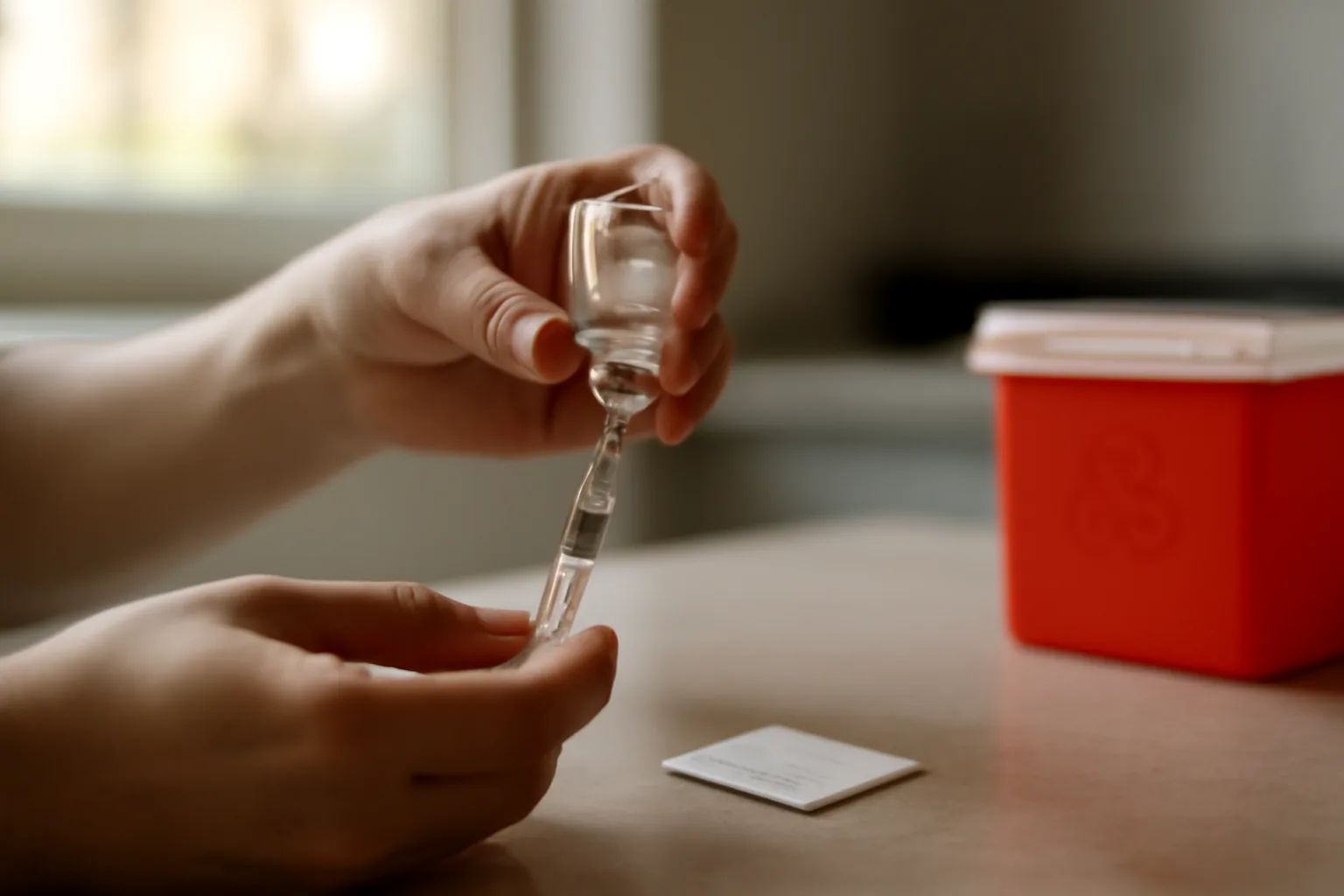
Semax arrives as lyophilized (freeze-dried) powder in sealed vials, typically in 5 mg or 10 mg quantities. You reconstitute it with bacteriostatic water (0.9% benzyl alcohol), which inhibits bacterial growth and allows multi-dose storage. The standard protocol: for a 10 mg vial, add 2 mL bacteriostatic water to yield a 5 mg/mL solution. For a 5 mg vial, use 1 mL to reach the same concentration. Draw the water into a sterile syringe, inject it slowly down the inside wall of the vial (not directly onto the powder), and let it dissolve passively for 2-3 minutes. Don't shake. Swirling gently is fine once the powder looks mostly dissolved. Why 5 mg/mL? It's concentrated enough that a typical 0.5 mg dose fits in 0.1 mL (100 µL, or 10 units on a 1 mL insulin syringe). Lower concentrations work too, they just require larger injection volumes. Some people prefer 2 mg/mL if they're dosing higher amounts and want room for measurement error. Store reconstituted Semax in the refrigerator (2-8°C). Bacteriostatic water keeps it stable for 28 days once mixed. The peptide itself degrades faster at room temperature; one study examining copper and zinc coordination found N-terminus acetylation (present in Semax) affects metal binding and potentially stability [5]. Keep vials in the original box to block light. Sterile technique matters. Wipe the rubber stopper with an alcohol pad before each draw. Use a fresh needle for injection (never reuse the drawing needle). If the solution turns cloudy or shows particulates, discard it. Bacteriostatic water contains 0.9% benzyl alcohol as a preservative. You can substitute sterile water for injection if you use the entire vial immediately, but you lose multi-dose stability. Plain distilled water is not sterile and will introduce contamination.
What is the correct dose and injection schedule?
Russian clinical protocols for stroke recovery used 0.5-1.5 mg Semax daily for 5-10 days, sometimes extended to 14 days [1]. Rodent studies testing neuroprotection have used both single-dose (0.25-0.5 mg/kg) and multi-day protocols (5-7 days) [6]. Translating animal doses to humans is imprecise, but a 70 kg person given 0.5 mg/kg would receive 35 mg, far above clinical human doses, so these are pharmacological models, not dosing guides. For cognitive or nootropic use (off-label, no approved indication), anecdotal reports cluster around 0.3-0.6 mg daily for 2-4 weeks, followed by a break. Some users cycle one week on, one week off. Nobody has rigorous data on chronic daily use beyond a few months. One dose per day is typical. Semax has a short half-life in circulation (reports vary, but likely under 30 minutes systemically before enzymatic cleavage), though CNS effects persist longer, suggesting the peptide or its metabolites remain active in brain tissue for hours [7]. Splitting the dose into twice-daily injections is possible but inconvenient, and the Russian stroke studies didn't do it. Higher doses (1.0-1.5 mg) appear in stroke and traumatic brain injury contexts, where neuronal rescue is the goal. Lower doses (0.3-0.5 mg) fit the nootropic use case: enough to modulate dopaminergic and serotonergic systems (one study found Semax increased dopamine and serotonin metabolite levels in rat striatum, hypothalamus, and frontal cortex at doses around 0.5 mg/kg) [8], but not pushing into acute-intervention territory. If you're new to Semax injection, start at 0.3 mg for 3-5 days and assess tolerance. Then move to 0.5 mg if you want more effect. Doses above 1.0 mg daily are rarely reported outside clinical brain-injury settings and have no clear benefit for cognitive enhancement.
How do you administer a subcutaneous Semax injection?
Subcutaneous (subQ) means into the fatty tissue layer between skin and muscle. It's the same technique used for insulin or heparin. Common injection sites: abdomen (at least 2 inches away from the navel), outer thigh, or back of the upper arm. Rotate sites daily to avoid tissue irritation. Don't inject into the same spot two days in a row. Step-by-step: 1. Wash your hands. Wipe the vial stopper with an alcohol pad. 2. Draw your dose into a 1 mL insulin syringe (these have 0.01 mL markings). For 0.5 mg from a 5 mg/mL solution, draw to the 0.1 mL mark (10 units). 3. Tap the syringe to move air bubbles up, then push the plunger gently to expel them and any excess fluid back to your target volume. 4. Wipe your injection site with a fresh alcohol pad. Let it dry (wet alcohol stings). 5. Pinch up a fold of skin between thumb and forefinger. Insert the needle at a 45-90° angle (either works for subQ; 90° is easier). The needle should go in smoothly; if you hit resistance, you may be too shallow or hitting muscle. 6. Push the plunger steadily. Inject over 2-3 seconds. 7. Pull the needle straight out. Press the site with a gauze pad or cotton ball for a few seconds if there's a drop of blood. Don't rub. 8. Dispose of the needle immediately in a sharps container (a rigid plastic container with a lid; never toss needles in regular trash). Pain or discomfort is minimal if you use a short, thin needle (insulin syringes are 28-31 gauge, 5-8 mm length). You may see a tiny red mark or feel slight pressure. A small bruise occasionally happens and resolves in a few days. Never inject intramuscularly (IM) unless a protocol specifically calls for it. Semax studies used subQ or intranasal routes. IM absorption is faster but has no documented advantage for this peptide.
What does the research say about injection vs. nasal delivery?
Most published Semax studies used intranasal administration, particularly older Russian trials from the 1990s and 2000s. The nasal spray route was the basis for its approval as a prescription medication in Russia. One comparative study found both nootropic and analgesic effects following different administration routes, though specific bioavailability numbers were not reported [7]. Intranasal delivery has the advantage of simplicity (no needles, no reconstitution) and direct access to the CNS via olfactory pathways. Nasal mucosa is highly vascularized, and small peptides can cross into cerebrospinal fluid and brain tissue without passing through the blood-brain barrier checkpoint in systemic circulation. This is why many neuropeptides are dosed nasally. But nasal absorption is variable. You lose peptide to mucociliary clearance (the mucus layer sweeps it toward your throat), enzymatic degradation on the mucosal surface, and improper spray technique (too shallow, too deep, sneezing right after). Bioavailability likely sits somewhere between 5-30%, though nobody has published a formal pharmacokinetic comparison of Semax nasal vs. injection. Subcutaneous injection bypasses the nasal mucosa entirely. The peptide enters systemic circulation, where peptidases cleave it rapidly, but a fraction crosses the blood-brain barrier or acts on peripheral targets (immune cells, vascular endothelium). Studies show Semax affects gene expression related to immune and vascular systems in brain tissue [9], suggesting the peptide or its active metabolites reach CNS targets even via parenteral routes. If you're trying Semax primarily for cognitive effects (focus, memory, verbal fluency), the nasal route is simpler and matches the published protocols. If you want the most reliable dosing, or if you've tried nasal spray and felt inconsistent results, injection gives you known bioavailability. For acute neuroprotection contexts (post-stroke, traumatic brain injury), Russian clinicians used injection, likely because dose precision mattered more than convenience. One practical note: U.S. compounding pharmacies typically prepare Semax as a nasal spray (often 0.1% solution, delivering ~300 µg per spray). Injectable Semax requires sourcing lyophilized powder from research suppliers, since no U.S. pharmacy routinely compounds it in sterile vials for injection. That's a sourcing and legality distinction, not a pharmacology one.
What are the risks and side effects of Semax injection?
Semax has a relatively clean safety profile in published studies. The Russian trials reported minimal adverse events. A 2021 rodent study examining early-life exposure to another drug found that Semax attenuated behavioural and neurochemical alterations, suggesting good tolerability even in developmental contexts [4]. Common injection-related issues: local irritation (redness, slight swelling at the injection site), bruising if you nick a capillary, or minor pain. These resolve within a day. Rotating sites prevents cumulative tissue irritation. Systemic side effects reported anecdotally (not confirmed in controlled trials): mild headache, occasional dizziness, or a sensation of mental overstimulation if dosed too high. Some users describe a "pressure" feeling behind the eyes with nasal spray; this seems less common with injection, possibly because the peptide doesn't sit in the sinuses. No serious adverse events (anaphylaxis, seizures, cardiovascular events) appear in the published literature at standard doses. A 2020 genomics study found Semax modulated expression of immune and vascular genes in ischemic brain tissue, but in a protective direction (upregulating BDNF, downregulating inflammatory markers) [9]. One recent animal model found Semax promoted functional recovery after spinal cord injury by targeting the μ opioid receptor gene and promoting deubiquitination, with no toxicity signals [10]. Long-term safety data (6+ months continuous use) doesn't exist in humans. Russian clinical use was typically 5-14 day courses, sometimes repeated after a break. Chronic daily dosing is off-label experimentation. Infection risk: any injection carries a small risk of introducing bacteria if sterile technique fails. Use fresh needles, alcohol prep pads, and bacteriostatic water. If you see spreading redness, warmth, or pus at an injection site, stop immediately and see a doctor. Semax is not FDA-approved for any indication. It doesn't appear on the 503A or 503B bulk drug substance lists [11] [12], meaning U.S. compounding pharmacies cannot legally use it in patient-specific compounded prescriptions without an FDA-approved NDA (which doesn't exist). The injectable form is typically obtained from research chemical suppliers as "not for human consumption," placing all safety responsibility on the user.
How should you store and handle reconstituted Semax?
Lyophilized (powder) Semax is stable at room temperature for short periods but should be stored in a freezer (minus 20°C or colder) for long-term preservation. Most suppliers ship it on ice packs. If it arrives warm, it's probably fine for a few days, but move it to the freezer immediately. Once reconstituted with bacteriostatic water, store the vial in the refrigerator (2-8°C). The benzyl alcohol preservative keeps bacterial growth in check for 28 days. After that, assume the solution is no longer sterile even if it looks clear. Toss it and mix a fresh vial. Don't freeze reconstituted peptide. Freezing can cause aggregation (the peptide molecules clump together), and repeated freeze-thaw cycles degrade it. One study examining Semax's effect on amyloid aggregation found the peptide interacts with copper-induced beta-amyloid structures in artificial membranes, highlighting its sensitivity to metal ions and environmental conditions [13]. Keep it cold, but not frozen. Light degrades many peptides. Keep the vial in its original box or wrap it in foil if the box is missing. Don't leave it on the counter under kitchen lights. Contamination check: before each draw, look at the solution. It should be clear and colorless (maybe faintly yellow, depending on the batch). Any cloudiness, floating particles, or color change means discard it. If the rubber stopper looks damaged or you've punctured it more than 15-20 times, the seal integrity is questionable. Travel: if you need to bring reconstituted Semax on a trip, use a small insulated cooler with an ice pack. It can tolerate a few hours at room temperature, but don't push it. For longer trips, consider bringing lyophilized powder and reconstituting on-site if you have access to bacteriostatic water and sterile supplies.
Where do you get Semax for injection, and is it legal?
Semax is not FDA-approved. It's not a controlled substance under the Controlled Substances Act (it's a peptide, not a scheduled drug), so possession is not criminalized. But it's not a legal medication in the U.S., either. U.S. compounding pharmacies can only use bulk drug substances that appear on FDA's 503A or 503B lists, or that are components of FDA-approved drugs [11] [12]. Semax is on neither list, and no approved NDA exists. A pharmacy could theoretically submit a Investigational New Drug (IND) application or participate in a clinical trial, but that's not happening for nootropic use. That leaves research chemical suppliers. These companies sell peptides labeled "for research purposes only" or "not for human consumption." Buyers use them off-label, at their own risk. Quality varies wildly: some suppliers provide third-party lab testing (HPLC purity, mass spec identity confirmation), others don't. If you can't see a current certificate of analysis (COA) showing >95% purity and correct molecular weight, don't buy it. Payment is typically cryptocurrency or credit card (some processors won't touch research chemicals, others don't care). Shipping is usually domestic (U.S. to U.S.) to avoid customs scrutiny. International orders can be seized by Customs and Border Protection, though Semax isn't a scheduled or explicitly banned substance, so outcomes vary. Pricing: a 10 mg vial of lyophilized Semax costs roughly $40-80 from research suppliers as of mid-2024. Add $10-15 for bacteriostatic water, $10 for a box of insulin syringes, and $5 for alcohol prep pads. Total upfront cost for a 2-4 week trial is around $70-100. If you're looking for a legal, provider-reviewed route, Semax nasal spray is available through Semax Labs, which partners with a U.S. compounding pharmacy. The pharmacy prepares the nasal spray under a physician oversight model. It's still off-label (no FDA approval exists), but you get quality assurance and a real pharmacist behind the product. Injectable Semax isn't part of that model, because parenteral compounding has stricter sterility requirements (USP <797> standards) and no established prescribing protocol exists in the U.S. For more on sourcing considerations, see our guide to buying Semax from Reddit and other communities.
How does injectable Semax compare to the nasal spray?
The main difference is bioavailability and convenience. Nasal spray is easier: no needles, no reconstitution, no refrigeration of pre-mixed solution (though the spray bottle should still be kept cool). You spray 1-3 times per nostril once or twice daily, and you're done. Dosing is less precise because mucosal absorption varies, but most users don't need precision for cognitive use. Injection gives you near-100% bioavailability into systemic circulation (less if some leaks back out of the injection site, but that's small). You know exactly how much peptide entered your body. The downside is effort: reconstituting, measuring, injecting daily, rotating sites, handling sharps waste. Pharmacokinetics: nasal delivery may provide more direct CNS access via olfactory pathways, bypassing first-pass hepatic metabolism. Subcutaneous injection sends the peptide into circulation, where peptidases cleave it quickly (half-life likely under 30 minutes), but metabolites or a small fraction of intact peptide can cross the blood-brain barrier. A 2020 study using functional connectomics found Semax altered brain network connectivity, measured via fMRI [14], confirming CNS activity regardless of route. For cognitive effects (focus, verbal fluency, mood), most users report nasal spray works fine. For acute neuroprotection (post-concussion, stroke recovery), Russian clinicians used injection, probably because dose reliability mattered more in a medical crisis. Cost is similar per milligram of peptide, but injection requires more supplies (syringes, bacteriostatic water, sharps container). Nasal spray is a bottle and a tissue. If you've tried nasal Semax and felt inconsistent results, or you want to eliminate absorption variability, injection is worth testing. If nasal spray works and you're not dealing with a neurological emergency, there's no reason to switch.
What does Semax do in the brain, and why inject it?
Semax's core mechanism involves the Pro-Gly-Pro (PGP) tripeptide sequence at its C-terminus. This tripeptide is a breakdown product of collagen and has known neuroprotective properties on its own. The ACTH(4-10) portion (Met-Glu-His-Phe-Pro-Gly-Pro) is thought to modulate neurotrophic factor expression. One mechanism: Semax upregulates BDNF. A 2006 study found the peptide binds specifically to rat basal forebrain tissue and increases BDNF protein levels [2]. Another study showed Semax and PGP activate transcription of BDNF, NGF, and their receptors (TrkA, TrkB) after cerebral ischemia [3]. BDNF supports neuronal survival, synaptic plasticity, and long-term potentiation (the cellular basis of learning and memory). Dopamine and serotonin modulation: one rodent study found Semax increased striatal and hypothalamic levels of dopamine and serotonin metabolites, suggesting enhanced monoaminergic neurotransmission [8]. That fits anecdotal reports of improved focus and motivation. Neuroprotection in ischemia: genomic studies show Semax downregulates inflammatory genes and upregulates protective genes after stroke. A 2014 transcriptome analysis found the peptide affected hundreds of genes related to immune response, vascular function, and neurotransmitter systems in ischemic rat brain [9]. A 2021 protein expression study confirmed these findings at the proteome level, identifying pathways involved in oxidative stress response, synaptic transmission, and apoptosis [15]. A 2024 study found that ACTH-like peptides (including Semax) compensated for gene expression disruptions caused by ischemia one day after experimental stroke, suggesting rapid transcriptional remodeling [16]. Another 2025 genomic study identified specific genes associated with neuroprotective action in brain regions with varying degrees of ischemic damage [17]. One emerging area: interaction with the μ opioid receptor. A 2025 animal study found Semax promoted functional recovery after spinal cord injury by targeting the Oprm1 gene (μ opioid receptor) and enhancing protein deubiquitination [10]. This was in female mice, and sex differences in peptide response are underexplored. Why inject instead of using nasal spray for these effects? If you're in a clinical context (post-stroke, TBI), injection was the route used in Russian hospital protocols, and you want to match the evidence. For general cognitive use, either route works. Injection is overkill unless you've verified that nasal absorption is inadequate for you personally. Semax also modulates GABA-receptor systems, according to a 2023 study examining synthetic corticotropins [18]. The same study noted both direct and delayed effects, hinting at genomic (slower) and non-genomic (faster) signaling pathways.
Who should consider Semax injection, and who should avoid it?
Consider injection if:
- You've tried Semax nasal spray and felt inconsistent effects or suspect poor absorption (chronic nasal congestion, allergies, deviated septum).
- You want precise dosing control for a specific protocol (e.g., post-concussion recovery, where you're following a Russian clinical dose range).
- You're comfortable with self-injection technique and have experience with peptides or insulin.
- You can source high-purity lyophilized Semax with verified COA and handle sterile compounding at home. Avoid injection if:
- You have needle phobia or poor manual dexterity (risk of accidental needlestick).
- You lack access to sterile supplies (bacteriostatic water, alcohol pads, fresh syringes, sharps disposal).
- You can't commit to proper storage (refrigeration, light protection) and sterile technique.
- You have active skin infection near potential injection sites.
- You're pregnant or breastfeeding (no safety data exists; avoid all off-label peptides in these contexts).
- You have a bleeding disorder or take anticoagulants (injection carries higher bruising/hematoma risk). Semax is not a first-line treatment for any condition. It's an experimental nootropic with a niche evidence base (strong in Russian neurology, absent in Western regulatory approval). If you have a diagnosed neurological condition (stroke, TBI, dementia), work with a neurologist. Semax might be an adjunct, but it's not a substitute for evidence-based care. For general cognitive enhancement, start with nasal spray unless you have a specific reason to inject. If you do inject, start at the low end (0.3 mg) and assess tolerance before increasing. Cycle use (e.g., 2 weeks on, 1 week off) rather than dosing continuously for months. A 2008 case study explored Semax's potential for depression treatment, noting promising results but calling for larger controlled trials [19]. None materialized in the West, so depression remains off-label speculation, not an evidence-backed indication.
Frequently asked questions
Can you inject Semax intramuscularly instead of subcutaneously?
You can, but there's no reason to. Published studies used subcutaneous or intranasal routes. Intramuscular injection is more painful, has higher risk of hitting a nerve or blood vessel, and doesn't improve absorption meaningfully for a small peptide like Semax. Stick with subQ unless a specific protocol tells you otherwise.
How long does reconstituted Semax last in the fridge?
Bacteriostatic water preserves reconstituted Semax for up to 28 days when stored at 2-8°C. After that, bacterial contamination risk increases even if the solution looks clear. Mark the reconstitution date on the vial and discard after 4 weeks. If you see cloudiness, color change, or particles at any point, throw it out immediately.
What happens if you inject too much Semax?
Acute overdose data doesn't exist, but Russian clinical doses topped out around 1.5 mg daily for stroke recovery. Anecdotal reports of higher doses (2-3 mg) describe headache, jitteriness, or mental overstimulation, not serious toxicity. If you accidentally inject double your intended dose, you'll likely feel uncomfortable but not endangered. Skip the next dose and resume at your normal amount.
Do you need a prescription for injectable Semax in the U.S.?
Semax is not FDA-approved, so no legitimate U.S. prescription exists. Some telehealth providers might write an off-label script for a compounding pharmacy, but most pharmacies won't fill it because Semax isn't on the 503A/503B bulk lists. Injectable Semax is typically obtained from research chemical suppliers as "not for human consumption." It's a legal gray area: not illegal to possess, not legal to market as a drug.
Can you mix Semax with other peptides in the same injection?
Not recommended unless you have stability data showing the peptides don't interact or degrade each other. Different peptides have different pH optima, solubility, and degradation pathways. Mixing them in one syringe is convenient but risks aggregation or reduced potency. Inject separately unless a published protocol specifically combines them.
Is Semax safe to use long-term, or should you cycle it?
Nobody has good data on continuous use beyond a few months. Russian clinical trials used 5-14 day courses, sometimes repeated after breaks. Anecdotal users often cycle 2-4 weeks on, 1-2 weeks off. Long-term daily use is uncharted. If you plan to use Semax for months, cycling is the cautious choice until someone publishes chronic-dosing safety data.
Does Semax injection hurt or cause side effects at the injection site?
Most people report minimal pain with insulin needles (28-31 gauge, short length). You might feel a brief sting or pressure. Occasional bruising or minor redness at the site is normal and resolves in a day or two. If you see spreading warmth, swelling, or pain that worsens, stop injecting and consult a doctor; that could indicate infection.
What size needle and syringe should you use for Semax injection?
A 1 mL insulin syringe with a 28-31 gauge needle, 5-8 mm length, is ideal. These are designed for subcutaneous injection, have fine measurement markings (0.01 mL increments), and cause minimal pain. You can find them at pharmacies (no prescription needed in most states) or online from medical supply retailers.
How does Semax injection compare to N-acetyl Semax amidate?
N-acetyl Semax amidate is a modified version with an acetyl group and an amide cap, which slows enzymatic degradation and extends half-life. It's typically used at lower doses (0.1-0.3 mg vs. 0.5-1.0 mg for regular Semax) and is thought to have stronger nootropic effects but less neuroprotective research. Both can be injected using the same technique. See our comparison guide for details.
Can you travel with Semax injection supplies?
Lyophilized powder is stable at room temperature for short periods and isn't a controlled substance, so traveling domestically is usually fine. Keep it in original packaging if possible. Reconstituted peptide needs refrigeration; use a small cooler with ice packs. TSA allows syringes if you're traveling with injectable medication, but Semax isn't FDA-approved, so you're in a gray area. Carry a printed study abstract or supplier documentation if questioned.
What is the best time of day to inject Semax?
Morning is typical, since Semax may increase alertness and focus (via dopaminergic effects). Some users report mild stimulation that interferes with sleep if dosed late in the day. Russian clinical protocols didn't specify time of day, so there's no hard rule. Try morning for a week; if you feel overstimulated, move it to early afternoon.
How quickly do you feel effects after a Semax injection?
Acute effects (focus, mood lift) can appear within 1-3 hours, likely from monoaminergic modulation. Neuroprotective and neurotrophic effects (BDNF upregulation, gene expression changes) take days to weeks. Don't expect a single injection to produce dramatic cognitive shifts; most users notice subtle improvements over 5-10 days of consistent dosing.
Can you inject Semax if you've only used nasal spray before?
Yes, but learn proper injection technique first. Watch a tutorial on subcutaneous injection (many diabetes education sites have good videos), practice sterile handling, and start with a low dose (0.3 mg) to confirm you tolerate the injectable route. The peptide is the same, but the pharmacokinetics differ (faster systemic absorption, less direct CNS delivery via olfactory pathways).
Does injectable Semax require a loading dose or can you start at a standard dose?
No loading phase is documented. Russian stroke protocols started at 0.5-1.0 mg from day one. For nootropic use, starting at 0.3 mg for a few days lets you assess tolerance, then move to 0.5 mg if you want more effect. There's no evidence that "loading" improves outcomes for Semax the way it does for some other drugs.
Sources
- Zhurnal nevrologii i psikhiatrii imeni S.S. Korsakova, 2018 (PMID 29798983): Russian clinical study found Semax efficacy in treating patients at different stages of ischemic stroke via injection
- Journal of neurochemistry, 2006 (PMID 16635254): Semax binds specifically to rat basal forebrain tissue and increases brain-derived neurotrophic factor (BDNF) protein levels
- Cellular and molecular neurobiology, 2010 (PMID 19633950): Semax and Pro-Gly-Pro activated transcription of neurotrophin genes (BDNF, NGF) and their receptors after cerebral ischemia
- Neuropeptides, 2021 (PMID 33418449): Semax attenuated behavioural and neurochemical alterations in rodent models, demonstrating tolerability
- Journal of inorganic biochemistry, 2016 (PMID 27586814): N-terminus acetylation of Semax affects copper(II) and zinc(II) coordination and potentially impacts biological properties and stability
- Genes, 2020 (PMID 32580520): Study examined ACTH(4-7)PGP (Semax) protective properties at transcriptome level following cerebral ischaemia-reperfusion in rats
- Rossiiskii fiziologicheskii zhurnal imeni I.M. Sechenova, 2010 (PMID 21268834): Study examined nootropic and analgesic effects of Semax following different administration routes
- Neurochemical research, 2005 (PMID 16362768): Semax activated dopaminergic and serotoninergic brain systems in rodents, increasing dopamine and serotonin metabolite levels
- BMC genomics, 2014 (PMID 24661604): Semax affected expression of genes related to immune and vascular systems in rat brain focal ischemia through genome-wide transcriptional analysis
- British journal of pharmacology, 2025 (PMID 40692165): Semax peptide targets μ opioid receptor gene Oprm1 to promote deubiquitination and functional recovery after spinal cord injury in female mice
- 21 CFR 216.23, FDA bulks list for 503A compounding: Final 503A bulk drug substances list for pharmacy compounding (Semax not included)
- 21 CFR 216.24, FDA bulks list for 503B compounding: 503B bulk drug substances list for outsourcing facility compounding (Semax not included)
- ACS chemical neuroscience, 2022 (PMID 35080861): Semax affects copper-induced Abeta aggregation and amyloid formation in artificial membrane models
- Doklady biological sciences, 2020 (PMID 32342318): Functional connectomic study found Semax altered brain network connectivity measured via neuroimaging
- International journal of molecular sciences, 2021 (PMID 34201112): Brain protein expression profile confirmed protective effect of ACTH(4-7)PGP peptide (Semax) in rat cerebral ischemia-reperfusion model
- Biomedicines, 2024 (PMID 39767736): ACTH-like peptides compensated rat brain gene expression profile disrupted by ischemia one day after experimental stroke
- International journal of molecular sciences, 2025 (PMID 40650034): Study identified genes associated with ACTH-like peptides' neuroprotective action in rat brain regions with different degrees of ischemic damage
- Chemical biology & drug design, 2023 (PMID 36828803): Synthetic corticotropins including Semax showed direct and delayed effects on GABA-receptor system
- CNS spectrums, 2008 (PMID 18204410): Case study explored therapeutic possibility of Semax for depression, noting promising results but calling for larger controlled trials