Last updated 2026-07-24
TL;DR
Semax is almost exclusively used as a nasal spray in both Russian clinical practice and US compounding pharmacy settings. Subcutaneous and intramuscular injection have been studied in rodent models, where they produce measurable nootropic and analgesic effects, but published human dosing protocols and safety data for injection are minimal. Intranasal delivery is the documented route for the decades of Russian clinical experience.
Is Semax available as an injectable peptide?
Semax exists as a peptide molecule, so it can be formulated for injection. But nearly all the published clinical work uses intranasal administration [1]. The drug was developed for nasal drops and spray [2], and that's how it appears in Russian stroke and neurology protocols [3]. Some research peptide vendors offer Semax as lyophilized powder for reconstitution, which buyers sometimes reconstitute and inject subcutaneously. That practice is off-label, not supported by human trial data at scale, and not part of the Russian regulatory product design. The bulk of what we know about Semax in people comes from nasal administration. Compounding pharmacies in the US that make Semax typically produce nasal sprays, because the peptide is not on the FDA's 503A or 503B bulk substance lists [4][5] and is only legally compounded when a prescriber orders it for a specific patient based on an established medical need. The historical precedent for use is nasal.
What injection sites have been studied in animal models?
Russian preclinical studies on Semax tested both subcutaneous and intraperitoneal (abdominal cavity) injection in rodents. A 2010 paper looked at nootropic and analgesic effects across several administration routes in rats and found that subcutaneous Semax produced measurable effects on passive avoidance learning [6]. A 2021 study tested Semax delivered subcutaneously at 0.3 mg/kg in rats that had been exposed to fluvoxamine early in life and found that it attenuated some of the behavioral and neurochemical changes [7]. Another 2025 paper looked at Semax injected subcutaneously after spinal cord injury in female mice, targeting the μ opioid receptor gene [8]. Intraperitoneal injection (into the peritoneal cavity, not a route used in human peptide therapy) appears in several ischemia studies [9][10]. Intramuscular injection is less common in the rodent literature, probably because subcutaneous and IP routes are easier to perform at small scale. I found no published trials comparing subcutaneous to intramuscular sites in the same model. These routes tell us that the peptide is bioavailable when it bypasses the nasal mucosa, but rodent dosing, injection volumes, and pharmacokinetics don't translate directly to human protocols. A 0.3 mg/kg dose in a 300-gram rat is not the same thing as 20-30 mg in a 70-kilogram human, and nobody has published the titration data for subcutaneous or IM use in people.
Why is intranasal administration the standard route?
Semax was designed for direct nose-to-brain delivery [1]. The nasal mucosa has rich vascularization and direct anatomical pathways to the CNS, bypassing first-pass hepatic metabolism. Peptides are often degraded quickly in the GI tract and liver, so oral delivery is rarely effective. Injectable peptides work, but require sterile technique, cold storage, and a higher patient compliance burden. The Russian Ministry of Health approved Semax as 0.1% and 1.0% nasal drops in the 1990s, and that's the formulation used in all the large stroke, head trauma, and cognitive impairment trials [3]. When a compound has decades of safety data in one form, regulatory bodies and clinicians are reluctant to shift to a different route without new trials. Intranasal also allows for easy titration. Patients can take one spray or five, depending on the protocol. Injection is binary: you draw and inject a fixed dose. That makes dose-finding harder and raises the stakes for injection site reactions or technique errors. Finally, the compounding pharmacy route in the US revolves around prescriber familiarity. Doctors who prescribe Semax know the Russian literature, which is nasal. Very few have seen a published human protocol for subcutaneous or intramuscular Semax, so they default to nasal spray.
Can Semax be injected subcutaneously, and where?
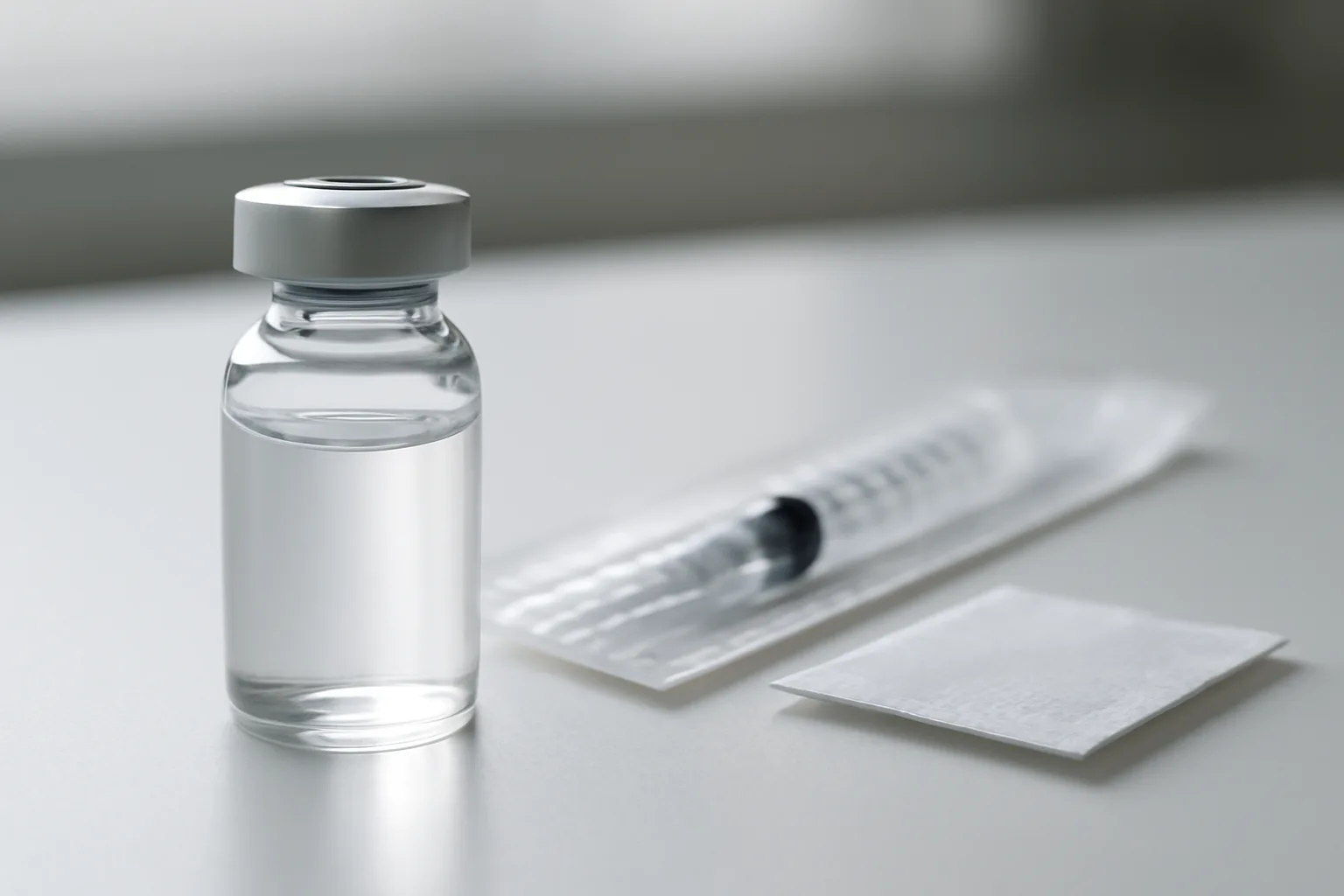
If you're working with a provider who prescribes injectable Semax, the typical subcutaneous sites are the same ones used for other peptide injections: abdomen (avoiding the navel by 2 inches), thigh, or upper arm. You want tissue with a good fat layer, minimal nerve density, and easy access. Subcutaneous injection deposits the peptide into the fatty layer under the skin, where it diffuses into capillaries. Absorption is slower than intramuscular but faster than oral. For small-volume peptides, you typically inject at a 45-degree angle with a short needle (0.5 to 1 mL, 29- to 31-gauge, 5/16 to 1/2 inch). Rodent studies used doses in the 0.3 to 1 mg/kg range subcutaneously [7][8], which would scale to roughly 20 to 70 mg in a 70 kg human if pharmacokinetics were linear (they often aren't). I can't find a published human dose-response curve for subcutaneous Semax. The Russian nasal protocols use 6 to 18 mg per day, split into multiple administrations. If your reconstituted Semax is 5 mg/mL, a 1 mg dose is 0.2 mL, which is a small injection volume. That's manageable for subcutaneous. Larger volumes might require splitting into two sites. Rotate sites to avoid lipohypertrophy and scar tissue buildup.
What about intramuscular injection sites?
Intramuscular injection delivers the peptide directly into muscle tissue, where blood flow is higher than in subcutaneous fat. Absorption is faster. The standard IM sites are deltoid (shoulder), vastus lateralis (outer thigh), and ventrogluteal (hip). Avoid the dorsogluteal site (upper outer buttock) because of sciatic nerve risk. For small peptide volumes, the deltoid is convenient and has good absorption. You inject at a 90-degree angle, needle length 1 to 1.5 inches depending on body composition, 22- to 25-gauge. If the volume is under 1 mL, deltoid works. Larger volumes go into the thigh or hip. I haven't seen any published trials using intramuscular Semax in humans. The rodent literature leans toward subcutaneous and intraperitoneal, probably because those routes are simpler in small animals. That doesn't mean IM is dangerous, just that it's uncharted. If a peptide is stable and non-caustic, it can usually be delivered IM, but you lose the slow-release benefit of subcutaneous fat. Intramuscular might make sense if you're trying to match a nasal spray's rapid onset. Nasal mucosa delivers the peptide quickly, and IM has faster absorption than subQ. But again, nobody has titrated this in people, so you're extrapolating from structure and from other peptides.
How does bioavailability compare across routes?
We don't have a head-to-head pharmacokinetic study comparing intranasal, subcutaneous, and intramuscular Semax in humans. What we know is that intranasal delivery bypasses hepatic first-pass metabolism and reaches the CNS relatively quickly, with measurable effects on gene expression in rat brain regions after ischemia [9]. Subcutaneous injection in rats produced nootropic effects at doses of 0.3 mg/kg and higher [6][7]. That tells us the peptide reaches the target tissues after subcutaneous delivery, but it doesn't give us a precise bioavailability figure or a time-to-peak-concentration curve. Peptides generally have moderate to good subcutaneous bioavailability if they're not heavily enzymatically degraded in the interstitial space. Intramuscular delivery usually has 70-100% bioavailability for peptides, faster than subcutaneous but still slower than IV. Intranasal bioavailability varies by molecule, but for peptides with good mucosal permeability it can range from 10% to 50%, with the trade-off that some fraction may reach the brain directly without systemic circulation. The Russian clinical dose of 6 to 18 mg per day intranasally [3] implies that enough peptide crosses the mucosa to produce measurable therapeutic effects in stroke and cognitive impairment patients. If you're injecting subcutaneously, you might need a lower dose because you're not losing peptide to drainage or swallowing. But that's speculation until someone publishes a human PK study.
What are the risks and technique considerations for injection?
Peptide injection carries the standard risks: infection, injection site reaction, hematoma, lipohypertrophy (with repeated subcutaneous injections in the same spot), and rarely, abscess. Semax is an acetylated heptapeptide [11], fairly small, and in rodent studies it didn't produce notable injection site toxicity at typical doses. Sterile technique is non-negotiable. Use an alcohol swab on the vial stopper and the injection site. Don't touch the needle tip. Inject slowly to reduce tissue trauma. Dispose of sharps properly. If you see redness, swelling, or warmth that persists beyond a day, talk to your provider. Reconstitution is straightforward for most peptide users. Draw bacteriostatic water slowly down the side of the vial to avoid foaming, swirl gently, don't shake. Store in the fridge (most peptides are stable for weeks at 2-8°C after reconstitution, but check your supplier's or pharmacy's guidance). Bring the syringe to room temperature before injecting to reduce discomfort. Dosing is the bigger unknown. If your provider is prescribing injectable Semax, ask them how they derived the dose. If they're scaling from the nasal literature, you might start at the lower end (0.5 to 1 mg subcutaneously) and titrate based on response. I'd want to see baseline and follow-up cognitive or mood markers, more than subjective reports. Semax affects dopaminergic and serotonergic systems [12], so overdoing it might produce restlessness or insomnia.
Do compounding pharmacies in the US make injectable Semax?
Most compounding pharmacies that produce Semax make it as a nasal spray, because that mirrors the published clinical use and the prescriber's familiarity. Semax is not on the FDA's official 503A or 503B bulk substance lists [4][5], which means it can only be compounded under 21 U.S.C. 353a if a practitioner writes a patient-specific prescription based on an established medical need [13]. Some pharmacies will compound Semax in an injectable form if a provider specifies that route on the prescription and provides a rationale. The pharmacy has to source the bulk peptide from a registered supplier, ensure sterility, and label it appropriately. The end product is a sterile solution or suspension, typically in a multidose vial with bacteriostatic water or saline. You won't find injectable Semax in a catalog the way you'd find nasal spray options. It's a special-order item, and the pharmacy will want to confirm the prescriber's intent. Some providers who work in longevity, integrative, or regenerative medicine are comfortable prescribing off-label peptides if they're familiar with the literature. Others aren't. If you're exploring Semax, the path of least resistance is the nasal spray through a provider who reviews your medical history and writes the prescription. That route has the clinical track record. If your provider suggests injection, ask what dose they recommend, what they base it on, and how they'll monitor response.
What does the Russian literature say about injection vs nasal use?
The bulk of the Russian clinical literature uses intranasal Semax [3]. I found only a handful of animal studies that tested subcutaneous or intraperitoneal routes [6][7][8][9]. The regulatory product in Russia is nasal drops and spray, and that's what clinicians reached for in the large ischemic stroke trials [3] and the neurorehabilitation studies. One reason is convenience. Stroke patients in an acute setting can't always self-administer an injection, and hospital staff are more comfortable with intranasal delivery. Another is the historical development: Semax was designed as an intranasal drug in the 1980s and 1990s, and the approval pathway was built around that form. The Western research community has mostly ignored Semax, so we don't have NIH-funded phase II trials testing different routes. The Russian literature is rich in clinical observation but often short on pharmacokinetic detail. Many studies report outcomes (cognitive scores, stroke recovery, adverse events) without publishing serum concentration curves or CSF penetration data. That gap is the single most important thing to understand about Semax. It has decades of use in Russia, mostly intranasal, and a modest but real literature showing effects on gene expression [9][14], neurotrophin levels [15], and dopaminergic pathways [12]. Western neurologists and psychiatrists haven't replicated that work, so the evidence quality is lower than for FDA-approved nootropics. The Russian trials are generally open-label or small randomized studies, not the large double-blind phase III trials that change US practice guidelines. Injection might work, but the clinical precedent is thin. If you're weighing routes, the question is: do you want to follow the documented path (nasal), or do you want to extrapolate from rodent studies and peptide pharmacology (injection)? Both are reasonable, but they're different bets.
How should I choose between nasal spray and injection?
Start with what your provider is comfortable prescribing. If they have experience with intranasal Semax and you're using it for cognitive support, memory, or recovery from a neurological event, nasal is the straightforward choice. It's the route with published human data [3], it's easy to dose, and it doesn't require injection supplies or sterile technique. If your provider suggests injection, ask why. Maybe they think the bioavailability will be more predictable, or they're drawing from experience with other peptides. Get specifics: what dose, what schedule, what injection site, what monitoring plan. If they can't point to a dose-response curve or a case series, you're both working from first principles. Some peptide users prefer subcutaneous because they want to avoid nasal irritation or they're already injecting other compounds (BPC-157, thymosin beta-4, etc.) and adding Semax to the rotation is logistically simple. That's a valid reason if you're experienced with sterile technique and you understand you're off the documented path. I'd lean toward nasal unless you have a strong reason to inject. The Russian clinical track record is nasal [3], the US compounding pharmacies default to nasal, and the risk of user error (contamination, incorrect dilution, site infection) is lower with a spray. If you do inject, rotate sites, keep a log, and check in with your provider at 4-6 weeks to see if you're getting the effects you wanted. One more thing: Semax is not a regulated pharmaceutical in the US. It's compounded under 503A as a custom prescription [13]. That means the quality control is only as good as the pharmacy you're working with. Ask your provider which compounding pharmacy they use, whether that pharmacy tests for potency and sterility, and whether they'll share a certificate of analysis. That due diligence matters more than the injection site.
Frequently asked questions
Can I inject Semax intramuscularly instead of subcutaneously?
Yes, but there's no published human protocol for intramuscular Semax. IM injection has faster absorption than subcutaneous, so it might produce a quicker onset. Standard IM sites (deltoid, vastus lateralis, ventrogluteal) work for small peptide volumes. Rotate sites and use sterile technique. Ask your provider to specify the dose and rationale, because the Russian clinical work is nearly all intranasal.
How much Semax should I inject if I'm switching from nasal spray?
There's no validated conversion chart. Intranasal doses in Russian trials are typically 6 to 18 mg per day, but bioavailability is lower than injection. If you're moving to subcutaneous, you might start with 0.5 to 1 mg per injection and titrate based on response. Work with a provider who can monitor cognitive or mood outcomes, not guesswork.
What needle size should I use for subcutaneous Semax injection?
A 29- to 31-gauge, 5/16 to 1/2 inch needle works for subcutaneous peptide injections. Use a 0.5 to 1 mL insulin syringe if your volume is small (under 1 mL). Inject at a 45-degree angle into the fatty tissue of the abdomen, thigh, or upper arm. Rotate sites to avoid lipohypertrophy.
Is Semax injection FDA-approved?
No. Semax is not FDA-approved in any form. It can be compounded by US pharmacies under 21 U.S.C. 353a as a patient-specific prescription if a provider determines medical necessity. Compounded Semax is almost always nasal spray, because that's the documented clinical route. Injectable Semax is off-label and uncommon.
Where on the abdomen should I inject Semax subcutaneously?
Inject at least 2 inches away from your navel, in the fatty tissue of the lower or side abdomen. Avoid areas with visible veins, moles, or scar tissue. Pinch the skin to lift the fat layer, insert the needle at 45 degrees, inject slowly, and withdraw. Rotate sites (left side, right side, lower abdomen) to prevent tissue buildup.
Can I mix Semax with other peptides in the same syringe?
Generally no, unless you have specific guidance from a provider or pharmacist that the peptides are chemically compatible. Mixing peptides can alter pH, stability, or precipitation. It's safer to draw and inject them separately, even if you're injecting at the same site.
How long is reconstituted Semax stable in the fridge?
Most peptides reconstituted with bacteriostatic water are stable for 2 to 4 weeks at 2-8°C. Check your compounding pharmacy's or supplier's guidance, because stability testing varies. Discard if the solution becomes cloudy or discolored. Don't freeze reconstituted peptide.
Does injecting Semax hurt more than nasal spray?
Subcutaneous injection stings briefly, less than intramuscular. Nasal spray can cause mild irritation or a medicinal taste. Pain tolerance is individual. If you're already comfortable with peptide injections, adding Semax won't change much. If you're new to injections, nasal spray is less intimidating.
Can I use the same injection site for Semax every day?
No, rotate sites. Repeated injections in the same spot cause lipohypertrophy (lumpy fat tissue) and scar tissue, which reduces absorption. Use a rotation schedule: left abdomen, right abdomen, left thigh, right thigh, etc. Keep a log if that helps.
What are the signs of an injection site infection?
Redness, warmth, swelling, and pain that worsen after 24 hours. Pus, fever, or red streaks extending from the site are urgent. Most peptide injections produce mild soreness for a few hours, which resolves. If symptoms persist or intensify, contact your provider immediately.
Why isn't injectable Semax more common if it's bioavailable?
Because the Russian clinical literature and regulatory approvals are for intranasal use. Providers prescribe what they're familiar with, and the published stroke, cognitive impairment, and neuroprotection studies are all nasal. Injection works in rodent models, but there's no large human dataset to guide dosing or safety monitoring.
Can I inject Semax intravenously for faster onset?
Don't. IV injection of non-sterile or improperly prepared peptides carries high infection risk, embolism risk, and unpredictable pharmacodynamics. Semax has not been studied IV in humans. If you want faster onset than nasal, consider intramuscular under provider supervision, but IV is not safe or justified.
How do I dispose of used Semax syringes?
Place used needles and syringes immediately into a rigid sharps container (an FDA-cleared container or a heavy-duty plastic bottle with a screw cap). Don't recap needles. When the container is three-quarters full, seal it and dispose of it according to your local regulations, often through pharmacy take-back or household hazardous waste programs.
Sources
- Therapeutic peptides in gerontology: mechanisms and applications for healthy aging (Frontiers in Aging, 2026): Semax is primarily administered intranasally in clinical practice
- Pharmacological Aspects of Neuro-Immune Interactions (Current Pharmaceutical Design, 2018): Semax was developed as an intranasal formulation for neuroprotection
- The efficacy of semax in the treatment of patients at different stages of ischemic stroke (Zhurnal Nevrologii i Psikhiatrii Imeni S.S. Korsakova, 2018): Russian stroke protocols use intranasal Semax at 6-18 mg per day
- 21 CFR 216.23, the final 503A Bulks List: Semax does not appear on the FDA's 503A bulk substance list
- 21 CFR 216.24, the 503B Bulks List: Semax is not included in the 503B bulk substance list for outsourcing facilities
- Nootropic and analgesic effects of Semax following different routes of administration (Rossiiskii Fiziologicheskii Zhurnal Imeni I.M. Sechenova, 2010): Subcutaneous Semax produced measurable nootropic effects in rat passive avoidance learning
- Semax, synthetic ACTH(4-10) analogue, attenuates behavioural and neurochemical alterations following early-life fluvoxamine exposure in white rats (Neuropeptides, 2021): Subcutaneous Semax at 0.3 mg/kg attenuated behavioral changes in rats exposed to fluvoxamine
- Semax peptide targets the μ opioid receptor gene Oprm1 to promote deubiquitination and functional recovery after spinal cord injury in female mice (British Journal of Pharmacology, 2025): Subcutaneous Semax promoted functional recovery after spinal cord injury in mice
- The peptide semax affects the expression of genes related to the immune and vascular systems in rat brain focal ischemia: genome-wide transcriptional analysis (BMC Genomics, 2014): Intranasal Semax affected gene expression in rat brain regions after ischemia
- Novel Insights into the Protective Properties of ACTH(4-7)PGP (Semax) Peptide at the Transcriptome Level Following Cerebral Ischaemia-Reperfusion in Rats (Genes, 2020): Intraperitoneal Semax showed protective effects at the transcriptome level after cerebral ischemia-reperfusion in rats
- Influence of the N-terminus acetylation of Semax, a synthetic analog of ACTH(4-10), on copper(II) and zinc(II) coordination and biological properties (Journal of Inorganic Biochemistry, 2016): Semax is an acetylated heptapeptide with specific metal coordination properties
- Semax, an ACTH(4-10) analogue with nootropic properties, activates dopaminergic and serotonergic brain systems in rodents (Neurochemical Research, 2005): Semax activates dopaminergic and serotonergic systems in rodent brain
- 21 U.S.C. 353a, pharmacy compounding: Compounded drugs require a patient-specific prescription based on established medical need under 21 U.S.C. 353a
- Semax, an analog of ACTH(4-7), regulates expression of immune response genes during ischemic brain injury in rats (Molecular Genetics and Genomics, 2017): Semax regulates immune response gene expression during ischemic brain injury
- Semax, an analogue of adrenocorticotropin (4-10), binds specifically and increases levels of brain-derived neurotrophic factor protein in rat basal forebrain (Journal of Neurochemistry, 2006): Semax increases brain-derived neurotrophic factor protein levels in rat basal forebrain