Last updated 2026-07-24
TL;DR
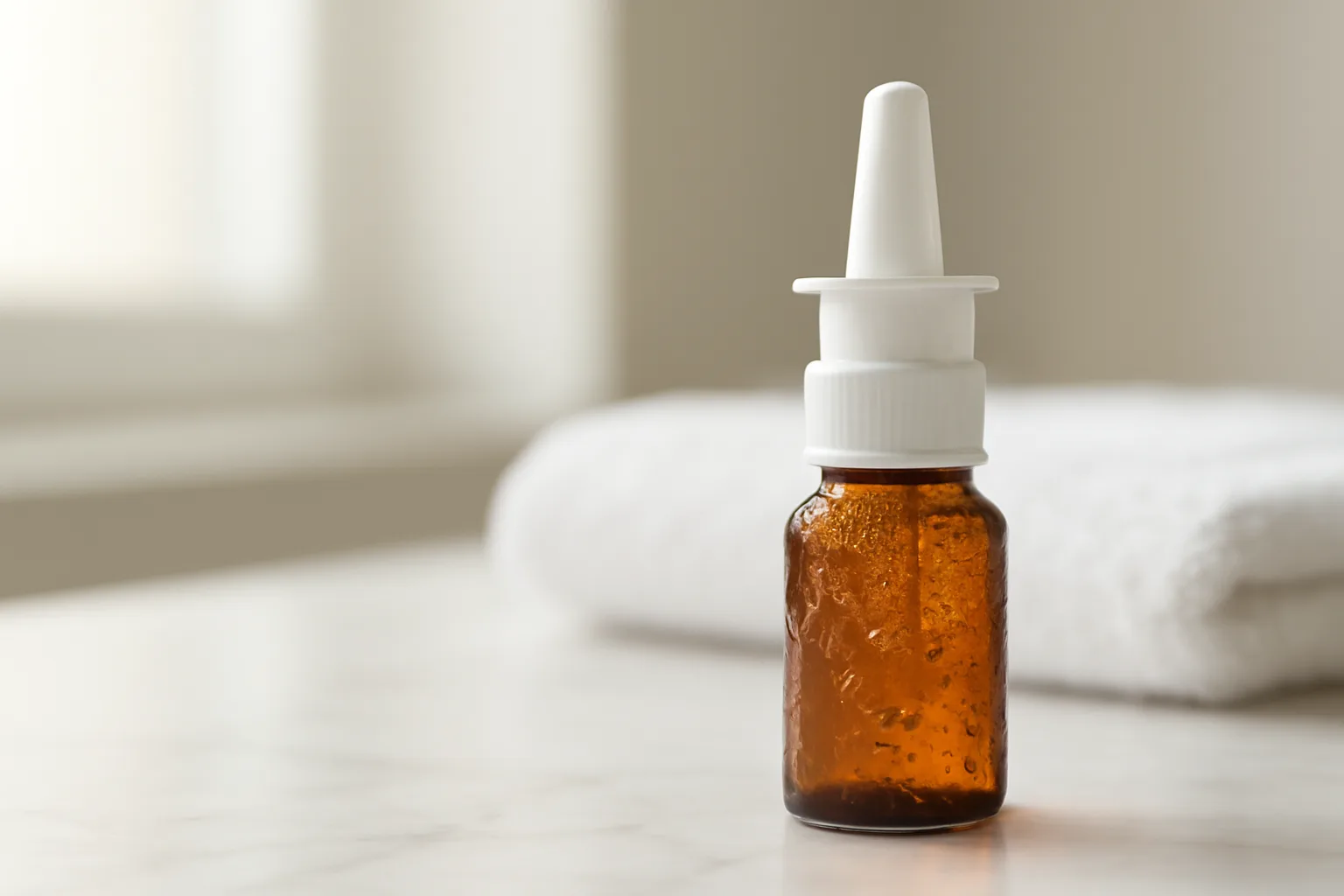
Semax is almost always used as a nasal spray. Standard dosing is 300 to 600 mcg per nostril, once or twice daily. You tilt your head slightly forward, insert the spray tip one centimeter into the nostril, press once, breathe gently in, and repeat on the other side. Clinical protocols in Russia often run 10 to 14 days, then a break. Semax is not FDA-approved, so U.S. access is through compounding pharmacies working with prescribers who assess off-label use.
What is the standard way to take Semax?
Semax is a synthetic heptapeptide (Met-Glu-His-Phe-Pro-Gly-Pro) derived from ACTH(4 to 10), developed in Russia in the 1980s and approved there as a nasal solution for stroke recovery and cognitive support [1]. It has never been approved by the FDA for any indication [2]. In clinical and research settings, Semax is almost always given intranasally as a spray or drops [3] [4]. That's the formulation tested in Russian trials, the form approved in Russia, and what most users outside hospitals encounter. Intranasal delivery gets the peptide into the bloodstream through the nasal mucosa. Some of it may travel along the olfactory and trigeminal nerve pathways directly into the CNS, bypassing the blood-brain barrier [5] [6]. The bioavailability by this route is modest but sufficient to reach the concentrations associated with dopaminergic, serotonergic, and neurotrophin activity in animal models [7]. Subcutaneous injection is possible and has been studied in animal experiments [8], but it is not the usual human route and carries higher infection risk if sterile technique is not perfect. Most self-administered Semax you'll encounter is a nasal spray compounded by a U.S. pharmacy under section 503A or 503B [9] [10]. If you see someone on Reddit talking about injecting Semax, it's often a gray-market peptide of unknown purity, not a pharmacy product.
How much Semax should I use per dose?
Published Russian clinical protocols typically use 300 to 600 micrograms per nostril, delivered once or twice a day [3] [4]. That means each spray (or set of drops) deposits about 300 to 600 mcg of the peptide. Some stroke-rehabilitation studies used up to 3000 mcg per day split across multiple administrations [3]. A dose below 200 mcg per nostril is probably too low to produce the gene-expression changes and monoamine shifts seen in research [11] [7]. U.S. compounded nasal sprays come in concentrations like 0.1% (1 mg/mL). If the pump dispenses 0.1 mL per spray, that's 100 micrograms per spray, so you'd need three sprays per nostril to reach 300 mcg. A 0.5% formulation (5 mg/mL) delivering 0.1 mL per spray gives 500 mcg in a single spray per nostril. Verify your vial's concentration and pump calibration with the pharmacy. The math is simple: concentration (mg/mL) times volume per spray (mL) times 1000 equals micrograms per spray. Dosing more than 1200 mcg per day (600 mcg per nostril twice daily) is not well documented in the literature and increases the chance of nasal irritation or systemic side effects without clear added benefit. If your prescriber recommends a higher dose, ask for the rationale. Learn more about daily dosing.
What is the step-by-step administration technique?
1. Wash your hands. Ensure the spray nozzle or dropper tip is clean. 2. Gently blow your nose to clear mucus. A clear passage improves absorption. 3. Shake the bottle if instructed (some suspensions require it; most Semax solutions do not). 4. Tilt your head slightly forward, not back. Leaning back sends the solution down your throat instead of holding it in the nasal cavity. 5. Close one nostril by pressing a finger against it. Insert the spray tip about one centimeter into the open nostril. Do not jam it up against the septum; aim slightly toward the outer wall of the nostril. 6. Press the pump once (or squeeze the prescribed number of drops). Breathe in gently as you spray. Avoid a hard sniff that pulls everything into your throat. 7. Keep your head tilted forward for 10 to 15 seconds. Pinch the nostril gently or just hold still. This gives the peptide time to absorb. 8. Repeat on the other nostril. 9. Wipe the nozzle with a clean tissue and recap. Store the bottle upright, refrigerated if the pharmacy label says so (most compounded peptides are refrigerated to extend shelf life). You might taste a faint metallic or chemical flavor in the back of your throat afterward. That's normal; some solution drains into the pharynx. Rinsing your mouth won't harm efficacy.
When should I take Semax during the day?
Russian clinical protocols often gave Semax in the morning, reasoning that its dopaminergic and serotonergic effects could support wakefulness and attention without interfering with sleep [7] [12]. If dosing twice daily, the second spray is typically mid-afternoon, at least six hours before bed. A 2010 study in rats showed that intranasal Semax improved memory-task performance and had analgesic effects across different administration times [4], so timing flexibility probably exists, but anecdotal reports from users suggest that evening dosing can cause restlessness or vivid dreams. Take Semax on an empty stomach or with a light meal. There is no formal food-interaction study, but intranasal absorption is generally independent of gastric contents. If you experience nausea, try taking it after a small snack. Some prescribers recommend a washout day each week, especially during longer runs. The neurotrophin upregulation (BDNF increases [13]) and gene-expression changes [11] may persist for a day or two after dosing stops, so a 6-days-on, 1-day-off schedule or a 5-day-on, 2-day-off pattern could prevent receptor downregulation, though no published study explicitly tests cycling schedules in humans.
How long should a Semax course last?
Acute ischemic-stroke trials in Russia used 7 to 14 days of daily Semax, then stopped [3] [14]. Cognitive and attention studies sometimes ran 10 days [15]. A 2018 Russian journal reported efficacy at different stroke stages over similar short-term windows [3]. The peptide is not positioned as a lifelong daily medication, even in its home market. Think of it as an intervention for a defined period, not a maintenance drug. If you're using Semax off-label for focus or stress resilience, the most common pattern is 10 to 14 days on, then at least a week off. That mirrors the clinical precedent and reduces the risk of tolerance (a theoretical concern; no human study has formally measured it) [16]. Some users on nootropics forums report benefits that last days after stopping, consistent with transcriptional changes that outlive the peptide's plasma half-life [17]. Running Semax continuously for months is not documented in peer-reviewed literature. The longest published human trial I'm aware of was a few weeks [18]. If your prescriber suggests longer, ask what outcome they're tracking and how they'll know if tolerance or side effects develop. Understand potential side effects.
Can I inject Semax instead of using nasal spray?
You can, but it's not the standard route, and it's not what the Russian approvals cover [1]. Animal studies used subcutaneous injection to control dosing precisely [8] [19]. A few small human studies injected Semax intramuscularly or subcutaneously [4], but those were hospital or lab settings with sterile prep. If you're considering injection, you need a prescriber willing to write for that route, a compounding pharmacy that prepares a sterile injectable (more than a nasal formulation relabeled), proper injection technique, and a sharps-disposal plan. Infection risk is real if you skip alcohol swabs, reuse needles, or touch the vial septum. Read more about Semax injection specifics. Intranasal is simpler, less invasive, and matches the clinical evidence base. Unless you have a strong reason (chronic nasal congestion, prior surgery that destroyed your nasal mucosa), start with the spray.
Where can I get Semax in the United States?
Semax is not on the FDA's approved-drug list [2], so you will not find it at a retail pharmacy like CVS or Walgreens. U.S. access is through compounding pharmacies that prepare it under section 503A (patient-specific prescription) or 503B (outsourcing-facility batch) [9] [10]. The peptide is not explicitly listed on the FDA's 503A or 503B bulk-substances lists [20] [10], which means a prescriber must write a prescription for a patient-specific need and the pharmacist must judge clinical necessity and lack of a suitable FDA-approved alternative [21]. Semax Labs works with licensed compounding pharmacies that prepare provider-reviewed nasal spray. The process requires a telehealth or in-person consultation with a physician or nurse practitioner who evaluates your history, explains the off-label status, and decides whether to prescribe. If approved, the pharmacy ships a labeled vial with concentration, dose, and storage instructions. Typical cost is 80 to 150 dollars per month, depending on dose and pharmacy. Gray-market peptide vendors sell Semax as a "research chemical," often from China or Eastern Europe, with no third-party purity testing and no medical oversight. That route is cheaper but carries contamination risk, incorrect concentration, and zero recourse if something goes wrong. Compare sourcing options.
What should I expect after the first dose?
Most people feel nothing dramatic in the first hour. Semax is not a stimulant like caffeine or amphetamine [7]. Its effects come from modulating gene expression, neurotrophin levels, and monoamine turnover [13] [11], processes that take hours to days. A 2018 fMRI study in healthy adults found changes in default-mode-network connectivity after Semax, but those were measured days into dosing, not minutes [15]. Subjective reports (anecdotal, not trial data) describe improved verbal fluency, smoother task-switching, and reduced mental fatigue starting around day three to five. Some users notice brighter or more emotionally salient perception, possibly related to serotonergic effects [7]. Negative first-dose reactions are uncommon but can include mild headache, nasal stinging, or a warm flush. If you get a headache, drink water and reduce the next dose by 25%. Persistent headache or dizziness after three doses is a reason to stop and call your prescriber. If you feel nothing after 10 days at 600 mcg per day, either the peptide is underdosed/degraded or your individual response is minimal. Semax's cognitive effects are real in rodent models and in Russian clinical cohorts [22] [23], but placebo-controlled Western trials with rigorous blinding are scarce. Be honest about your expectations and track a simple outcome (focus duration, mood rating) to judge if it's working.
Are there differences between Semax and N-acetyl Semax amidate?
Yes. N-acetyl Semax amidate (also called NA-Semax or NASA) adds an acetyl group to the N-terminus and an amide to the C-terminus [24]. These modifications slow enzymatic breakdown and may change receptor binding [25]. Animal data suggests NA-Semax has a longer half-life and possibly stronger anxiolytic effects than regular Semax [26]. The two are not interchangeable, and dosing protocols differ. Regular Semax is the version approved in Russia and the one with the most human clinical data [1] [3] [3]. If you're starting from scratch, begin with plain Semax. NA-Semax is harder to source, more expensive, and the evidence base is thinner. Compare the two in detail.
How should I store Semax nasal spray?
Check the pharmacy label. Most compounded peptide solutions need refrigeration (2 to 8 degrees Celsius) to prevent degradation [27]. A vial left on a hot dashboard or in a gym bag for days will lose potency. If you're traveling, use a small cooler with an ice pack or ask the pharmacy for stability data at room temperature (some formulations are stable for a week or two at 20 to 25°C, but you need written confirmation). Keep the vial upright and capped when not in use. Light exposure can degrade peptides, so amber or opaque bottles are standard. Do not freeze Semax; ice crystals can break peptide bonds. If you see visible particles, cloudiness, or a color change (from clear or faintly yellow to brown), discard the vial and get a fresh one. Expiration dates on compounded vials are typically 30 to 90 days from the preparation date; that's a stability estimate, not a brick-wall cutoff, but potency does decline over time. Never share your nasal spray. The nozzle contacts mucous membranes and can transfer bacteria or viruses.
What does the quality of evidence actually look like?
Here's the uncomfortable truth: Semax has decades of Russian clinical use and regulatory approval in Russia for stroke and cognitive dysfunction [1], but it has almost no placebo-controlled, double-blind trials published in major Western journals. The bulk of the literature is Russian-language, published in journals that don't meet the impact-factor or peer-review standards of JAMA or The Lancet [3] [3] [28]. That does not mean the data is fabricated, but it does mean replication by independent labs in Europe or North America is sparse. Animal studies are numerous and show consistent neuroprotective, neurotrophin-upregulating, and monoaminergic effects [7] [13] [17] [29]. Gene-expression work in rats is high-quality and mechanistic [11] [30]. A 2020 transcriptome study found that Semax modulated immune and vascular genes after ischemia-reperfusion [17]. A 2025 paper in the British Journal of Pharmacology showed Semax promoted functional recovery after spinal-cord injury in female mice via the μ opioid receptor [19]. A 2025 study in Acta Naturae found Semax corrected amyloid-beta aggregation in an Alzheimer's model [31]. These are real findings in peer-reviewed journals, but they are rodent data, not human outcomes. The honest summary: if you demand FDA-level Phase III trials, Semax does not have them. If you're comfortable with a peptide that has 40 years of use in a single country, a mechanistic rationale supported by animal work, and limited but real human data, then it's worth discussing with a prescriber. Don't let anyone sell you on Semax as "proven" in the way atorvastatin or lisinopril is proven. It's not.
Frequently asked questions
Can I use Semax nasal spray while on antidepressants?
There is no published interaction study, but Semax activates serotonergic pathways in rodents [7], so combining it with SSRIs or SNRIs could theoretically raise serotonin levels too much. Talk to your prescriber. They may want to start at a low Semax dose and watch for signs of serotonin syndrome (agitation, confusion, rapid heart rate). Many users report taking both without issue, but that's anecdote, not clinical data.
How fast does Semax work?
Subjectively, most users notice changes around day three to seven. Objectively, the gene-expression and neurotrophin changes in animal models happen within hours to days [18][19]. A 2018 fMRI study found default-mode-network changes in humans, but after repeated dosing [32]. Don't expect a caffeine-like jolt. Think slower, cumulative shift.
Is it safe to use Semax every day long-term?
We don't know. The longest published human trial was a few weeks [25]. Russian clinical protocols are 10 to 14 days [20][21]. No study has tracked daily Semax use for six months or a year. Cycling (10 days on, 7 off) mirrors the clinical precedent and is the safer bet until long-term data exists.
Can I take Semax if I have high blood pressure?
Semax affected vascular-gene expression in ischemic rat brains [19][42], but there is no evidence it raises or lowers blood pressure in humans. A prescriber will review your cardiovascular history before prescribing. If you have uncontrolled hypertension, stabilize that first.
Does Semax need to be cycled like a steroid?
Semax is not a steroid and does not suppress endogenous hormone production. Cycling is recommended to prevent possible receptor desensitization (theoretical) and to match clinical protocols [20][21]. A common pattern is 10 to 14 days on, 7 to 10 days off.
What happens if I miss a dose?
Take it as soon as you remember, unless it's almost time for the next dose. Don't double up. Missing one dose in a 10-day course probably won't erase your progress, since neurotrophin changes persist longer than the peptide itself [18].
Can I use Semax if I'm pregnant or breastfeeding?
No. There are zero safety data in pregnancy or lactation. ACTH-derived peptides cross the placenta in animal models [45], and we have no idea what Semax does to fetal brain development. Don't use it.
Will Semax show up on a drug test?
Standard workplace or sports drug panels do not test for synthetic peptides like Semax. It is not banned by WADA (World Anti-Doping Agency) as of 2026, but always check the current list if you're a competitive athlete. If your sport has its own prohibited-substance list, verify independently.
Can I drive or operate machinery after taking Semax?
Yes. Semax is not sedating and does not impair reaction time in animal studies [17]. It is not a controlled substance. If you experience dizziness or a headache after dosing, wait until it resolves before driving.
How do I know if my Semax is real and not degraded?
If it's from a U.S. compounding pharmacy, you'll get a labeled vial with a beyond-use date and a pharmacist's name. If it's from a gray-market vendor, you don't know. The solution should be clear or faintly yellow, no particles, no brown color. If you want certainty, send a sample to a peptide-testing lab (Janoshik, Chromate, etc.) for HPLC-MS. That costs 100 to 150 dollars but gives you a purity percentage and confirms identity.
Is nasal spray as effective as injection for Semax?
The clinical data is almost all intranasal [11][12][13][20]. Injection is feasible and was used in some animal experiments [26], but it's not proven superior in humans and adds infection risk. Start with the spray unless you have a specific medical reason to inject.
Can Semax help with ADHD symptoms?
Anecdotally, some users report better focus and task initiation. A 2005 study in rodents showed Semax activated dopaminergic systems [7], which is relevant to ADHD pathophysiology. But there is no published ADHD trial in humans. It is not a substitute for FDA-approved ADHD medications. Discuss with a prescriber if you want to try it adjunctively.
What should I do if I get a headache after Semax?
Reduce your next dose by 25 to 50 percent and drink more water. If the headache persists for more than a day or is severe, stop and contact your prescriber. Headache is not a common side effect in published trials [13][20], but individual responses vary.
Does Semax interact with alcohol?
No formal study exists. Semax modulates GABA receptors in rodents [46], and alcohol is a GABAergic drug, so there is theoretical overlap. Anecdotal reports suggest no major interaction with moderate drinking, but heavy alcohol plus Semax is unstudied and unwise.
Sources
- PubMed PMID 28875850 (Current Pharmaceutical Design, 2018): Semax is a synthetic ACTH(4 to 10) analog approved in Russia for stroke and cognitive support.
- FDA Drugs@FDA database: Semax is not FDA-approved for any indication.
- PubMed PMID 29798983 (Zhurnal Nevrologii i Psikhiatrii, 2018): Russian stroke trials used intranasal Semax administration.
- PubMed PMID 21268834 (Rossiiskii Fiziologicheskii Zhurnal, 2010): Nootropic and analgesic effects were studied following different routes of Semax administration.
- PubMed PMID 41490200 (Journal of the American Academy of Orthopaedic Surgeons, 2026): Intranasal peptide delivery may allow CNS access via olfactory and trigeminal pathways.
- PubMed PMID 42021992 (Frontiers in Aging, 2026): Therapeutic peptides can bypass the blood-brain barrier via intranasal routes.
- PubMed PMID 16362768 (Neurochemical Research, 2005): Semax activated dopaminergic and serotonergic systems in rodents.
- PubMed PMID 33418449 (Neuropeptides, 2021): Subcutaneous Semax was used in animal behavioral studies.
- 21 U.S.C. 353a (Pharmacy Compounding): Section 503A governs patient-specific compounding by pharmacies.
- 21 CFR 216.24 (503B Bulks List): Section 503B allows outsourcing facilities to compound from approved bulk substances.
- PubMed PMID 24661604 (BMC Genomics, 2014): Semax affected gene expression related to immune and vascular systems in rat brain ischemia.
- PubMed PMID 32342318 (Doklady Biological Sciences, 2020): Functional connectomic changes were observed with Semax and Selank.
- PubMed PMID 16635254 (Journal of Neurochemistry, 2006): Semax increased brain-derived neurotrophic factor protein in rat basal forebrain.
- PubMed PMID 19633950 (Cellular and Molecular Neurobiology, 2010): Semax and Pro-Gly-Pro activated neurotrophin gene transcription after cerebral ischemia.
- PubMed PMID 30225715 (Bulletin of Experimental Biology and Medicine, 2018): Cognitive studies ran Semax for approximately 10 days.
- PubMed PMID 27921334 (Journal of Molecular Recognition, 2017): Synacton and individual activity of synthetic corticotropins were studied.
- PubMed PMID 32580520 (Genes, 2020): Transcriptome-level protective properties of Semax peptide following cerebral ischemia-reperfusion in rats.
- PubMed PMID 18204410 (CNS Spectrums, 2008): A therapeutic possibility study for depression used Semax over a short-term period.
- PubMed PMID 40692165 (British Journal of Pharmacology, 2025): Semax peptide promoted functional recovery after spinal cord injury in female mice.
- 21 CFR 216.23 (Final 503A Bulks List): The 503A bulk-substances list does not explicitly include Semax.
- 21 CFR 201.128 (Meaning of Intended Uses): Prescribers must assess clinical necessity and lack of suitable FDA-approved alternatives for compounded drugs.
- PubMed PMID 39767736 (Biomedicines, 2024): ACTH-like peptides compensated rat brain gene expression disrupted by ischemia.
- PubMed PMID 28255762 (Molecular Genetics and Genomics, 2017): Semax regulated expression of immune response genes during ischemic brain injury in rats.
- PubMed PMID 27586814 (Journal of Inorganic Biochemistry, 2016): N-terminus acetylation of Semax affected copper(II) and zinc(II) coordination and biological properties.
- PubMed PMID 35080861 (ACS Chemical Neuroscience, 2022): Semax affected copper-induced Abeta aggregation and amyloid formation in artificial membrane models.
- PubMed PMID 36828803 (Chemical Biology & Drug Design, 2023): Synthetic corticotropins and the GABA-receptor system showed direct and delayed effects.
- FDA, Bulk Drug Substances Nominated for Use in Compounding: Peptide stability and storage requirements are often specified by compounding pharmacies.
- PubMed PMID 19140465 (Vestnik Rossiiskoi Akademii Meditsinskikh Nauk, 2008): Evolution of the stress concept in Russian medical literature.
- PubMed PMID 40650034 (International Journal of Molecular Sciences, 2025): Genes associated with ACTH-like peptides with neuroprotective potential in rat brain regions.
- PubMed PMID 34201112 (International Journal of Molecular Sciences, 2021): Brain protein expression profile confirmed Semax's protective effect in cerebral ischemia-reperfusion.
- PubMed PMID 41479572 (Acta Naturae, 2025): Semax and its derivative corrected pathological impairments in an Alzheimer's disease animal model.
- PubMed PMID 30383932 (Molekuliarnaia Genetika, 2016): Possible role of transthyretin in the biological mechanism of regulatory peptide neuroprotection.